Food Fats: Function Is Built in the Crystal Network
Two fats with a similar profile can still perform very differently in food.
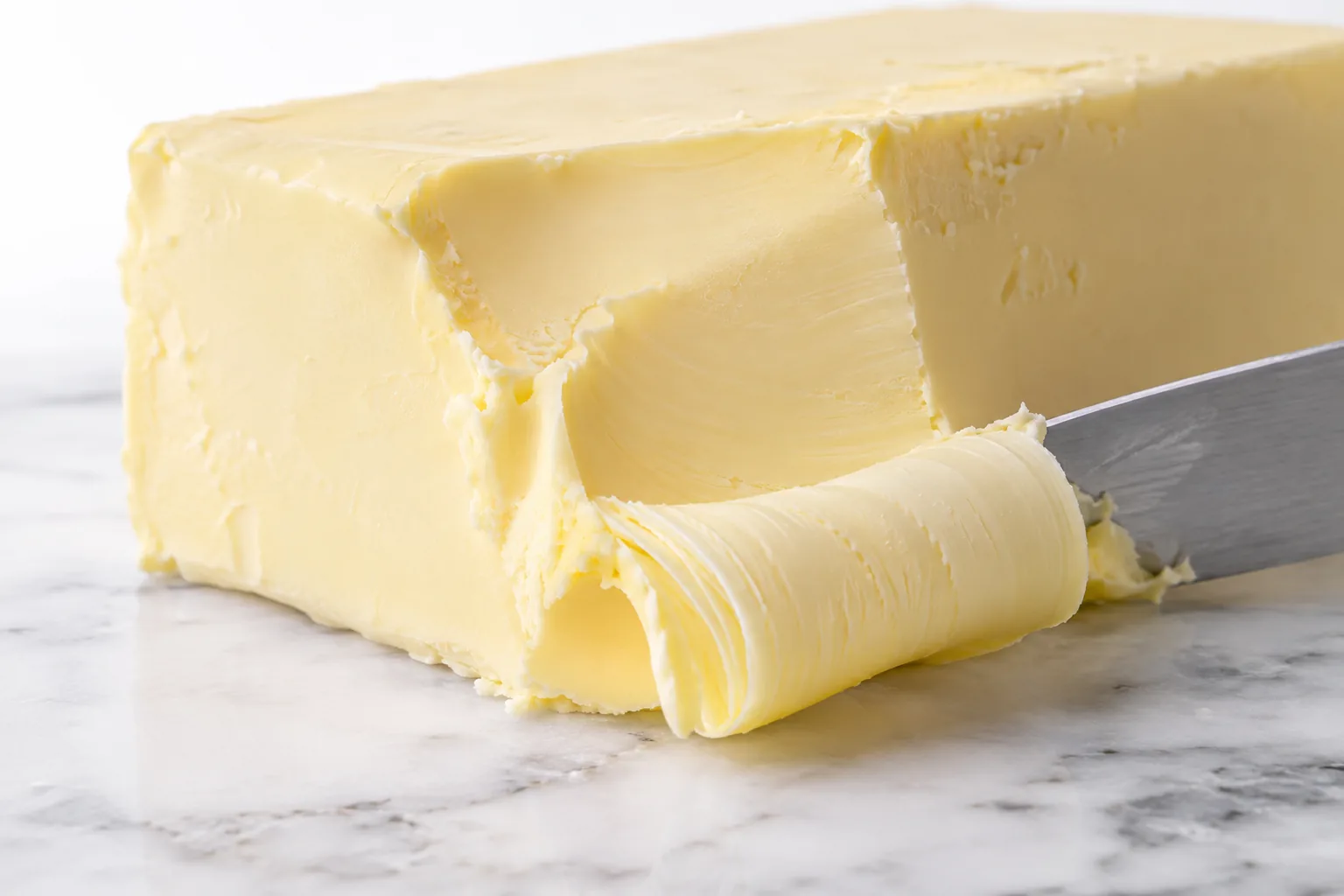
Fat does more in food than add flavour and calories. It gives a biscuit its bite, keeps pastry layers apart, holds air in a batter and carries heat in a fryer. Much of that comes from how the fat is structured, as well as from what it contains.
This article explains how fat crystals form, how to read a fat's solid-fat content, and why the same fat can work well in one product and badly in another.
Composition sets the options. Crystals set the function.
How a fat crystallises decides texture, as much as what it is made of.
A fat is a mix of triglycerides, each made of three fatty acids. As it cools, some of those triglycerides crystallise into a network that holds the remaining liquid oil in place. How fine or coarse that network is depends on the fat's make-up and on how it was cooled, mixed and stored. Two fats with similar fatty-acid profiles can form quite different networks.
- Minor components and processing history also matter.1
- Define product performance first, then match the fat.
Read the curve, not one number.
Solid-fat content (SFC) across temperature shows how firm a fat is when chilled, at room temperature and in the mouth.
Solid-fat content, or SFC, is the share of the fat that is solid at a given temperature. Reading it across a range of temperatures shows how a fat will behave in the fridge, on the production line and in the mouth. It is a useful screen, but it says nothing about crystal size or shape, so it cannot replace a trial in the real product.
- Similar SFC can still give different crystal networks.
- SFC screens candidates. It does not replace application tests.1
The fatty-acid profile is one design input. The crystal network decides the function.
Each application asks a different job.
Doughs, laminated pastry and fryers need different behaviour from the fat.
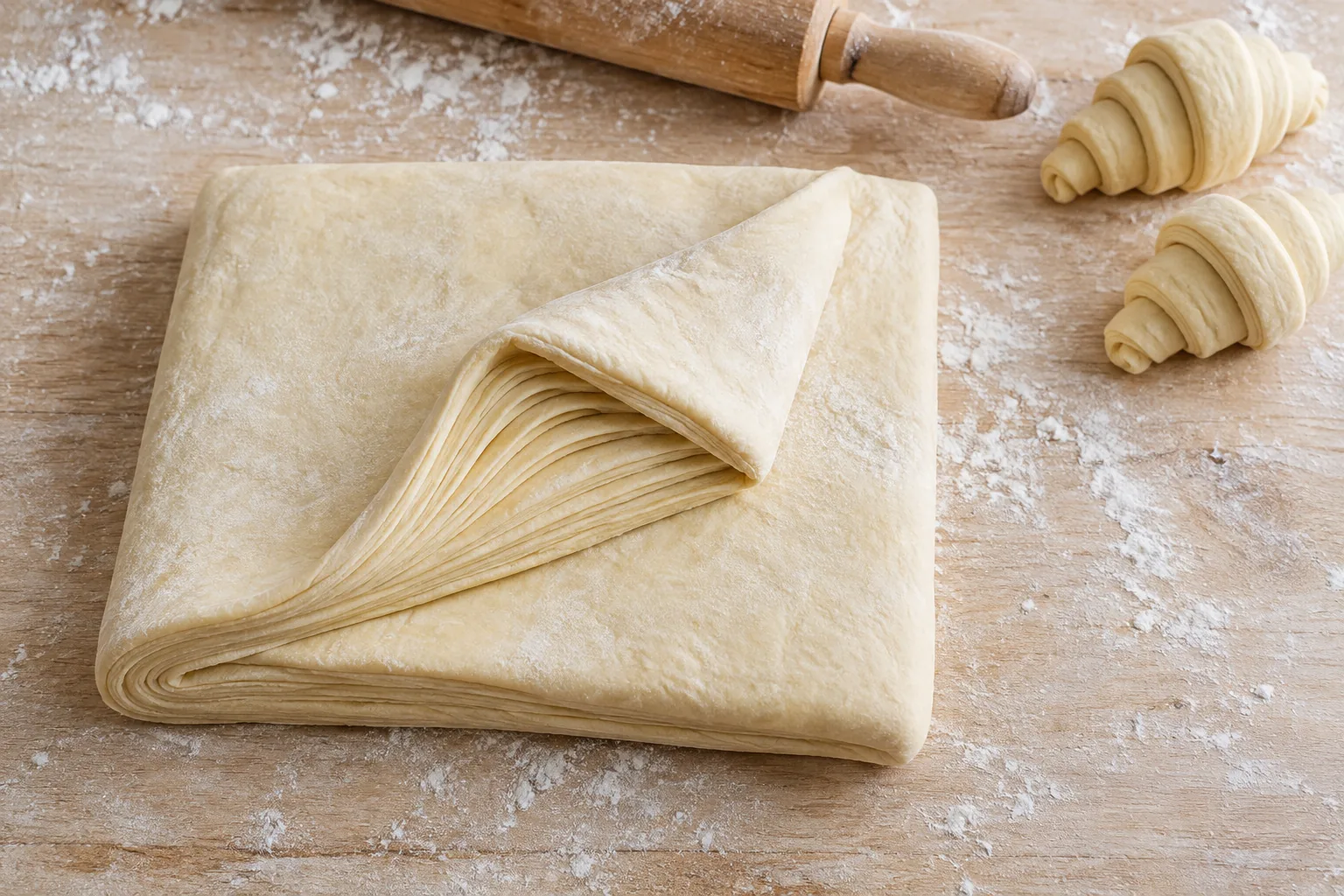
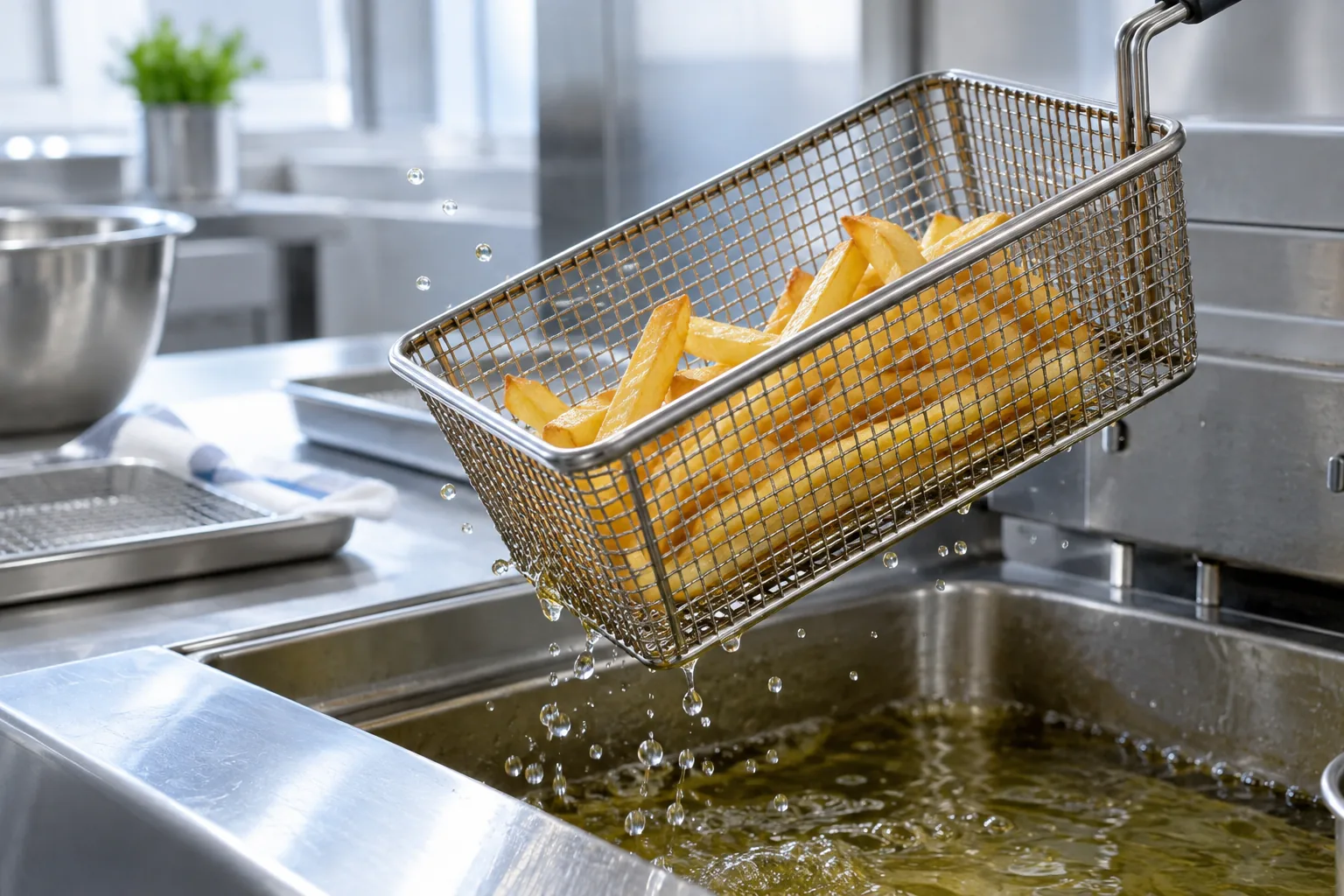
Each application needs a different balance of solid and liquid. A dough fat must stay plastic enough to mix, shorten and hold air. A laminating fat must form firm but pliable sheets that keep the dough layers apart. A frying fat has little to do with structure; its job is to transfer heat and stay stable through many hours at high temperature.
- Swapping a solid fat for liquid oil changes handling and structure.
- Frying life depends on the oil and the operation together.3
Reformulation is a system change.
Blends, fractions, emulsions and oleogels are options to test, not drop-in swaps.
Food makers change fats to improve nutrition, cost or sourcing. Replacing a firmer fat with a more liquid one can remove the structure the product relies on. Blending, fractionation, interesterification and newer structuring methods can help recover it, but every change has to be tested on the real line and through the product's shelf life.
- A more unsaturated profile can reduce the structure a food needs.2
- Validate under real manufacturing and storage conditions.
In short.
The fatty-acid profile tells you what a fat is made of. Its crystal network, solid-fat curve and processing history tell you how it will perform. Start from the product you are making, match the fat's physical behaviour to it and confirm the result in the finished food.
Before you choose.
- 1Start with the product specification.
- 2Map the temperature range.
- 3Review the full fat composition.
- 4Reproduce the processing history.
- 5Test in the finished recipe.
Composition, SFC, crystallisation and processing interact to create texture. Application tests remain necessary.
Structuring more unsaturated oils through fractionation, interesterification and oleogels, validated product by product.
Start with the finished product and its line. The profile is one input.
Talk to our teamReferences (3)
- da Silva, T. L. T. & Martini, S. (2024). Recent advances in lipid crystallization in the food industry. Annual Review of Food Science and Technology, 15, 355–379. doi.org/10.1146/annurev-food-072023-034403
- Das, M. & Das, A. (2024). A comprehensive review on strategies for replacing saturated fats in bakery products. Discover Food, 4, 156. doi.org/10.1007/s44187-024-00240-2
- Valle, P. R. et al. (2024). Deep-frying impact on food and oil chemical composition: Strategies to reduce oil absorption in the final product. Food Safety and Health, 2(4), 414–428. doi.org/10.1002/fsh3.12056
General principles for formulators. Not recommendations for a particular product, process or herd.