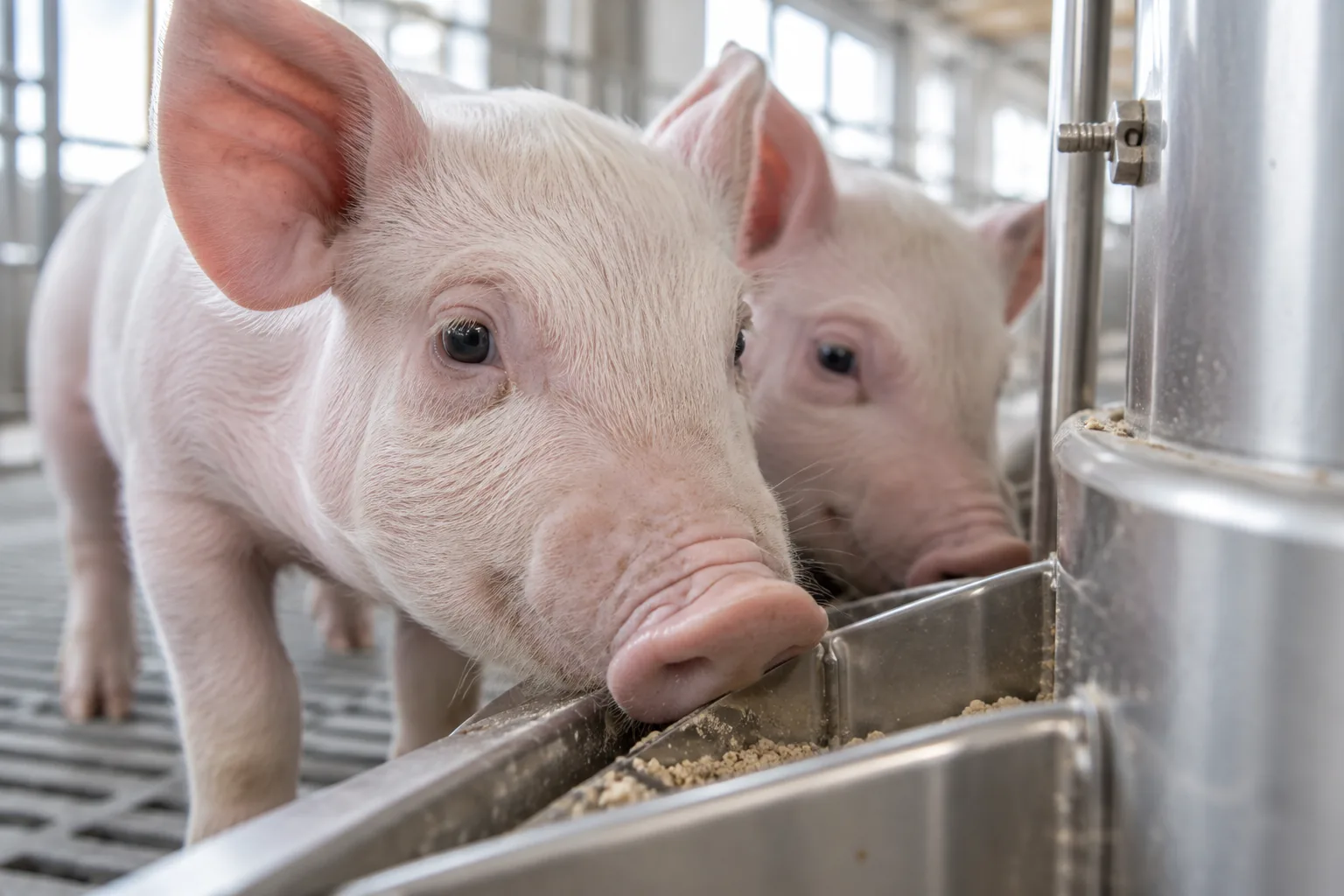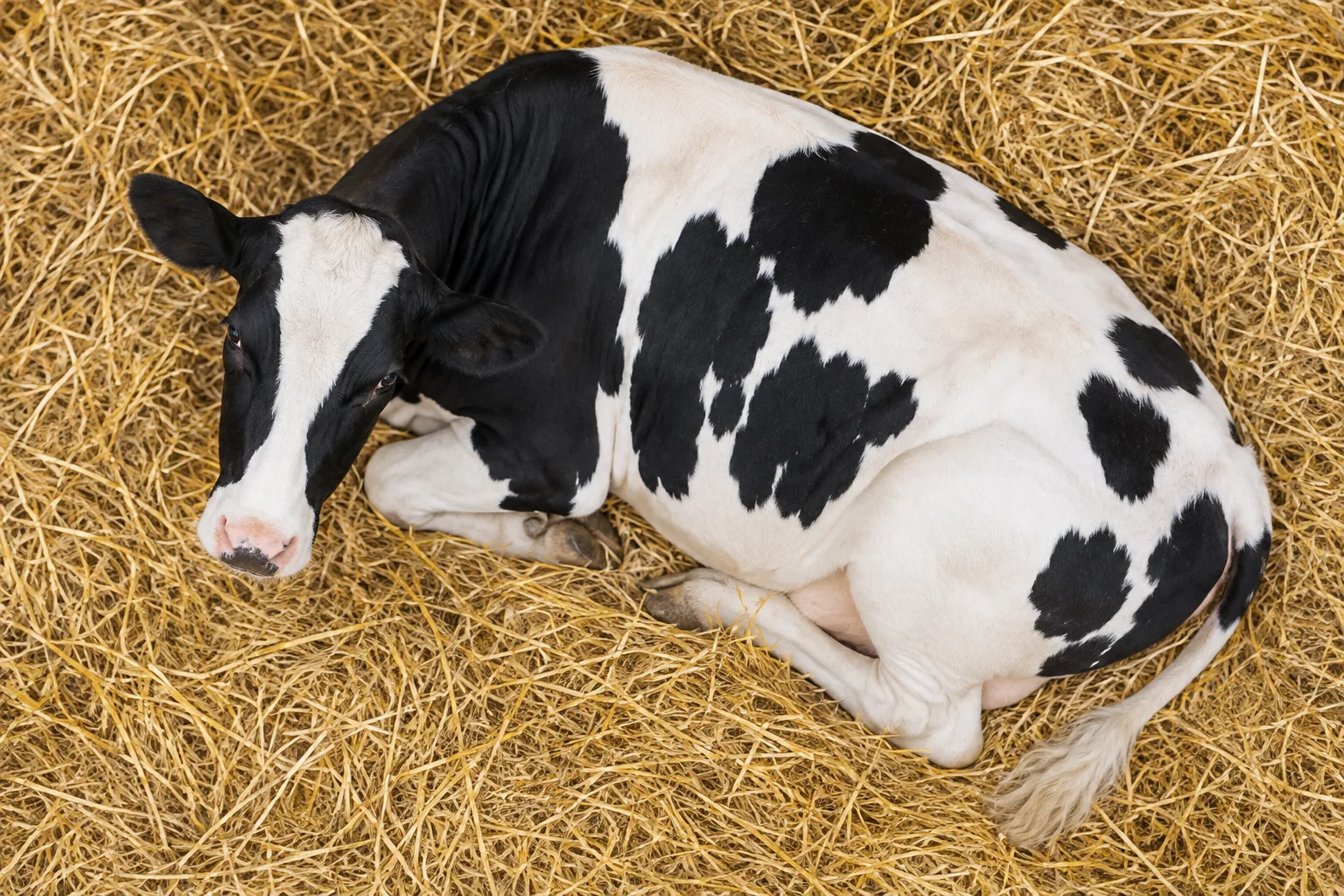
Not All Energy Is Equal
Two fats can carry the same crude fat and still behave very differently in the animal.
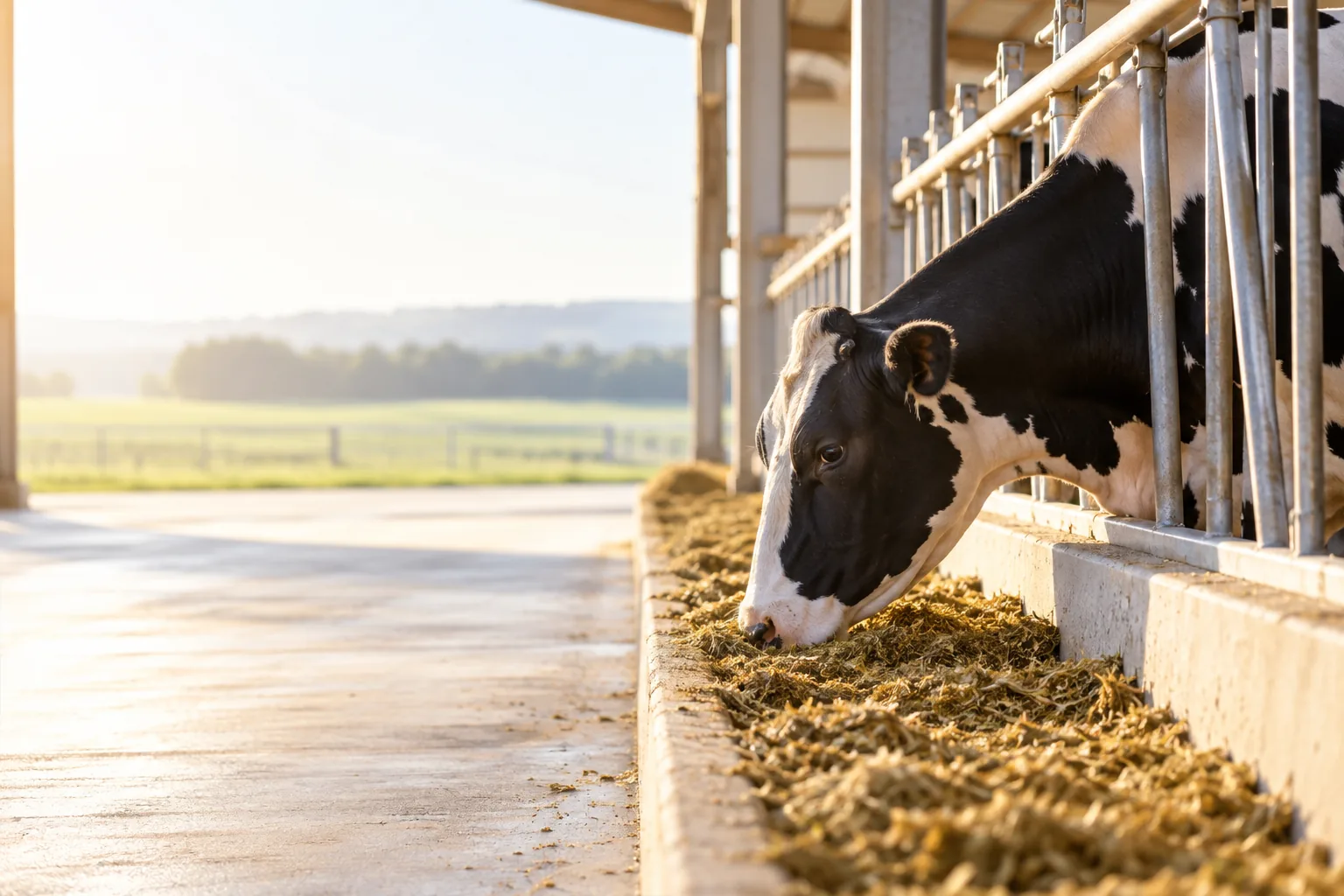
Feed formulators often compare fats by their crude fat or gross energy. Two ingredients can match on both and still give different results in the animal, because the energy on the label is not the energy the animal can use.
How much of that energy is absorbed depends on the fatty acids inside the fat: how long their chains are, how saturated they are, what chemical form they come in and how they are delivered. This article walks through those four factors, from C8:0 to C18:2, and what they mean when you choose a fat for a ration.
Chain length changes the route.
Shorter chains are handled faster. C8:0 and C10:0 are digested rapidly; long chains take a slower route through the gut wall.
Fat is digested in stages. It is dispersed, broken down by lipase, carried in micelles and absorbed through the gut wall. Short chains such as C8:0 and C10:0 move through these stages quickly and can pass straight to the liver. Long chains such as C16:0 and C18:0 are rebuilt into new fat particles inside the gut wall before they reach the bloodstream, which is a slower route.
Unsaturation helps absorption. It also brings trade-offs.
In pigs and poultry, C18:1 and C18:2 are generally more digestible than C16:0 and C18:0, most clearly in young animals.
Double bonds change how a fatty acid behaves. Unsaturated chains melt at lower temperatures and mix more easily into the micelles that carry fat to the gut wall, so pigs and poultry usually absorb them better than saturated chains. The same double bonds make a fat more prone to oxidation, and in pigs a highly unsaturated diet shows up as softer carcass fat.
A crude-fat value alone does not tell you how much energy an animal can use.
Form is part of the ingredient.
The same fatty acid can arrive as a triglyceride, a free fatty acid or a salt. Each enters digestion at a different starting point.
A fatty acid can be fed as part of a triglyceride, as a free fatty acid or as a salt, and each form starts digestion at a different point. Triglycerides first need lipase to cut them, and the enzyme works mainly on the outer positions. Free saturated fatty acids skip that step but can be hard to dissolve. In ruminants, the form also decides how much of the fat the rumen microbes can reach.
- The lipase mechanism is established. A consistent production benefit from changing chain position is not: one broiler study found re-esterified palm oil gave no gain over native palm oil.5
- In cattle, rumen microbes hydrogenate much of the C18:1 and C18:2. Protected forms reduce this, but protected does not mean fully inert.8
Delivery changes where it works.
Emulsifiers, glyceride forms and coatings are designed to change where a fat disperses and is released.
Some products are designed to change where in the gut a fat becomes available. Emulsifiers and glyceride forms help fat disperse and be digested, while coatings aim to delay release until further along. Results vary by product, dose and species, so a promising lab or gut-marker result should be confirmed with a real animal outcome.
In short.
Energy on paper and energy in the animal are different numbers. Chain length, saturation, molecular form and delivery all decide how much of a fat's energy is absorbed and used, and the right balance depends on the species, its age and the result you want. Compare fats on those terms rather than on crude fat alone.
Before you choose.
- 1Match the energy value to species, age and stage.
- 2Specify the lipid not just the source name: profile, FFA, oxidation.
- 3Count the whole diet minerals, fibre, processing.
- 4In ruminants, look past the rumen to post-ruminal supply.
- 5Measure the outcome that matters: digestibility, growth and milk differ.
Chain length, saturation, age, free fatty acids, oxidation and rumen exposure all belong in fat evaluation.
More precise descriptions of lipid form, targeted release and rumen pathways. These refine formulation; they do not rank fatty acids.
Start with the fatty-acid profile. Then check how its form and delivery fit the animal, the ration and the goal.
Talk to our teamReferences (8)
- Lauridsen, C. (2020). Effects of dietary fatty acids on gut health and function of pigs pre- and post-weaning. Journal of Animal Science, 98(4), skaa086. doi.org/10.1093/jas/skaa086
- Wealleans, A. L. et al. (2021). Fats and oils in pig nutrition: Factors affecting digestion and utilization. Animal Feed Science and Technology, 277, 114950. doi.org/10.1016/j.anifeedsci.2021.114950
- Kerr, B. J., Kellner, T. A. & Shurson, G. C. (2015). Characteristics of lipids and their feeding value in swine diets. Journal of Animal Science and Biotechnology, 6, 30. doi.org/10.1186/s40104-015-0028-x
- Ravindran, V. et al. (2016). Fats in poultry nutrition: Digestive physiology and factors influencing their utilisation. Animal Feed Science and Technology, 213, 1–21. doi.org/10.1016/j.anifeedsci.2016.01.012
- Re-esterified palm oils, compared to native palm oil, do not alter fat absorption, postprandial lipemia or growth performance in broiler chicks. Lipids (2014). doi.org/10.1007/s11745-014-3920-9
- Jackman, J. A., Boyd, R. D. & Elrod, C. C. (2020). Medium-chain fatty acids and monoglycerides as feed additives for pig production. Journal of Animal Science and Biotechnology, 11, 44. doi.org/10.1186/s40104-020-00446-1
- Appleton, S. R., Ballou, A. & Watkins, K. L. (2024). Use of monoglycerides and diglycerides to mitigate poultry production losses: A review. Veterinary Sciences, 11(3), 101. doi.org/10.3390/vetsci11030101
- Toral, P. G., Hervás, G. & Frutos, P. (2024). Invited review: Research on ruminal biohydrogenation. Journal of Dairy Science, 107(12), 10115–10140. doi.org/10.3168/jds.2023-24591
General principles for formulators. Not recommendations for a particular product, process or herd.